Urgent flights: prioritizing under pressure
Urgent flights need to land ahead of regular traffic, which means other planes have to make room. This guide covers how to clear a path and decide who waits.
What makes a flight urgent
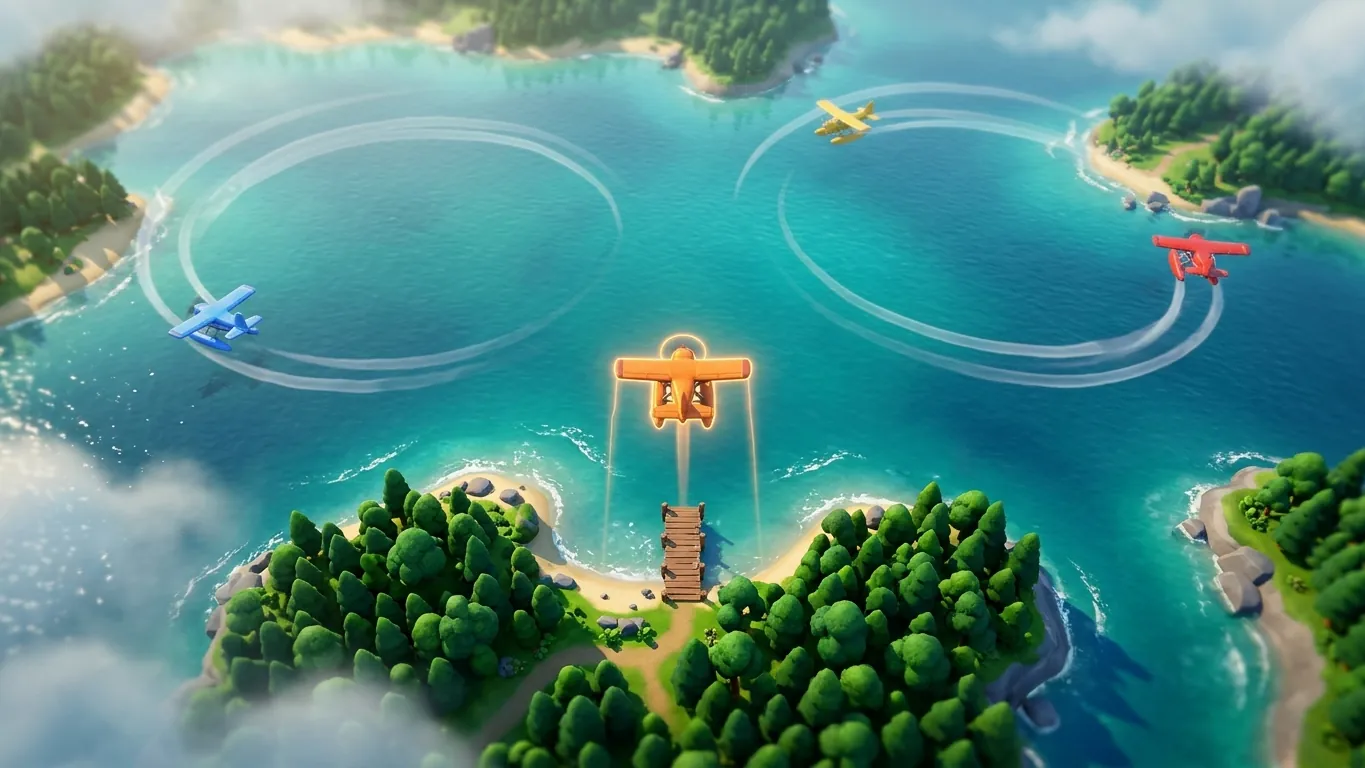
Seaplane Dispatcher adds urgent flights as the levels progress. These planes need to be landed and docked ahead of regular traffic, so they change your priorities the moment they appear.
An urgent flight is not harder to route than any other plane. The difficulty is that it forces you to rearrange everything around it. Regular planes that were heading to a convenient dock may need to wait or change direction.
The key is to treat an urgent flight as a planning task rather than a reflex. A few seconds spent looking at the whole map usually saves more time than rushing the urgent plane along the first line that comes to mind.
Clear the path, not just the dock
It is natural to focus on finding a free dock for an urgent flight. That is important, but the route to the dock matters just as much.
Check the whole approach. Are other planes crossing it? Is the harbour around the dock already busy? An urgent plane that reaches a free dock through a crowded channel can still collide on the way.
If the direct path is crowded, move the other planes rather than bending the urgent route. Regular traffic can usually take a wider path or wait over open water. Keeping the urgent route short and direct reduces the time it spends in the air.
Choosing which plane waits
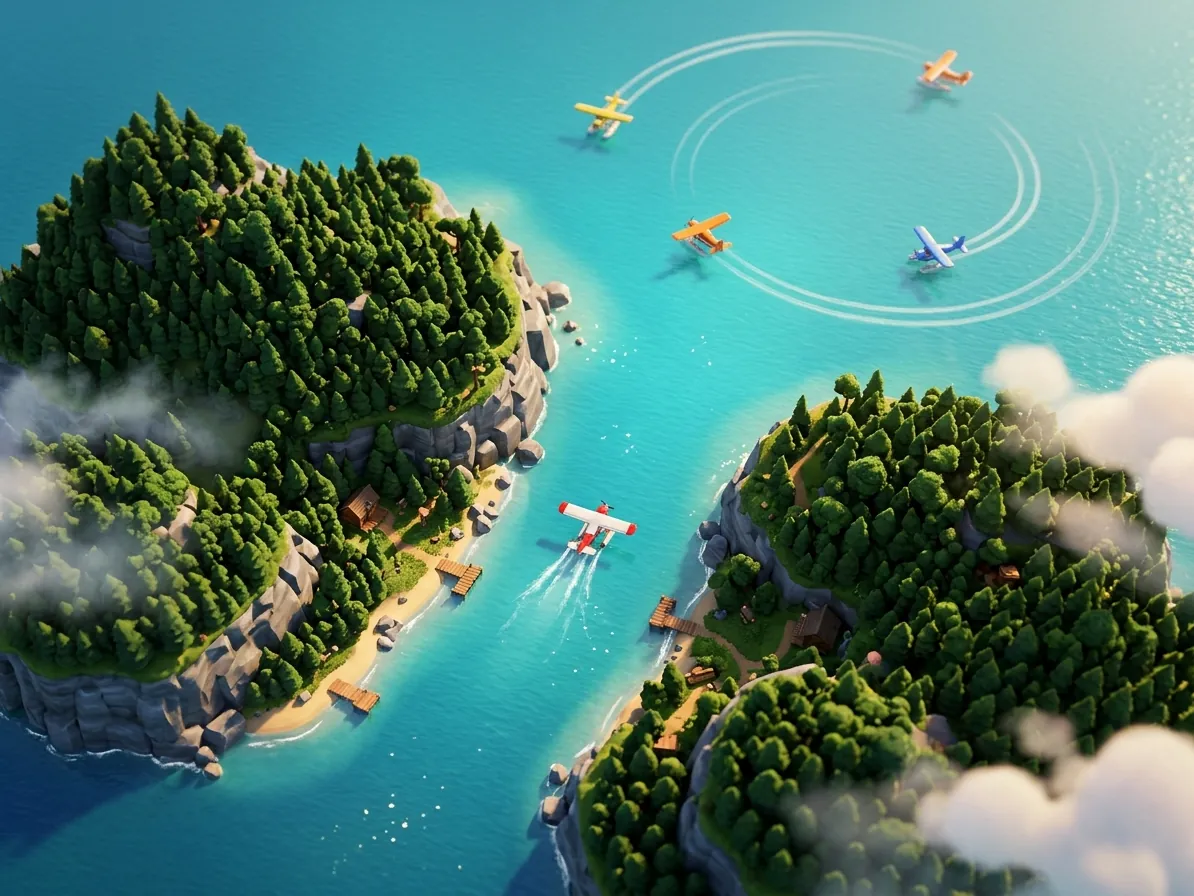
When an urgent flight appears, some regular planes will need to wait. Choosing the right ones keeps the level manageable.
Planes that are still far from the shoreline are usually easiest to delay. They have open water around them and can take a longer route without affecting others.
Planes that are already close to landing are harder to move. If their route does not cross the urgent approach, let them finish. Clearing them out quickly frees space and docks for what comes next.
Fast planes deserve extra attention here. Delaying a fast plane is possible, but it needs plenty of room, so give it a wide outer path rather than a short holding pattern.
A quick priority check
Run through these points each time an urgent flight enters the map.
- 01
Find a free dock
Pick a dock with a simple approach that is free now and likely to stay free.
- 02
Check the approach
Look along the urgent route for any planes that will cross it.
- 03
Move the regular traffic
Redraw routes for planes in the way, giving them wide paths over open water.
- 04
Watch it land
Keep an eye on the urgent plane until it reaches its dock, then rebalance the map.
When several urgent flights overlap
Later levels may bring more than one urgent flight at a time. This is where a spare dock, kept in reserve as described in our dock tips, becomes valuable.
Handle the urgent flight closest to a conflict first. Then look at the second one with the same checklist. Try to send them to docks in different parts of the lake district so their approaches do not overlap.
If the pressure feels overwhelming, slow down your own thinking rather than drawing faster. Short levels mean a mistake costs little, and each attempt teaches you more about where urgent flights tend to cause trouble on that map.
Related articles
 Chasing high scores in short levels
Tips for improving your records in Seaplane Dispatcher: build consistency, learn each map's rhythm and use short levels for focused practice.
Read more
 Unlocking new maps: what changes between lakes
An explainer on new maps in Seaplane Dispatcher: how progress opens fresh lake layouts, what tends to differ and how to approach your first run.
Read more
 Why short levels suit an air traffic puzzle
An opinion piece on Seaplane Dispatcher's short levels: why brief sessions suit an attention puzzle, where they work well and where they fall short.
Read more