Plan the opening
Decide on lanes for the first few planes before traffic builds up.
Seaplane Dispatcher tracks records across its short levels. These tips focus on steady habits that help you improve your results without turning play into a chore.
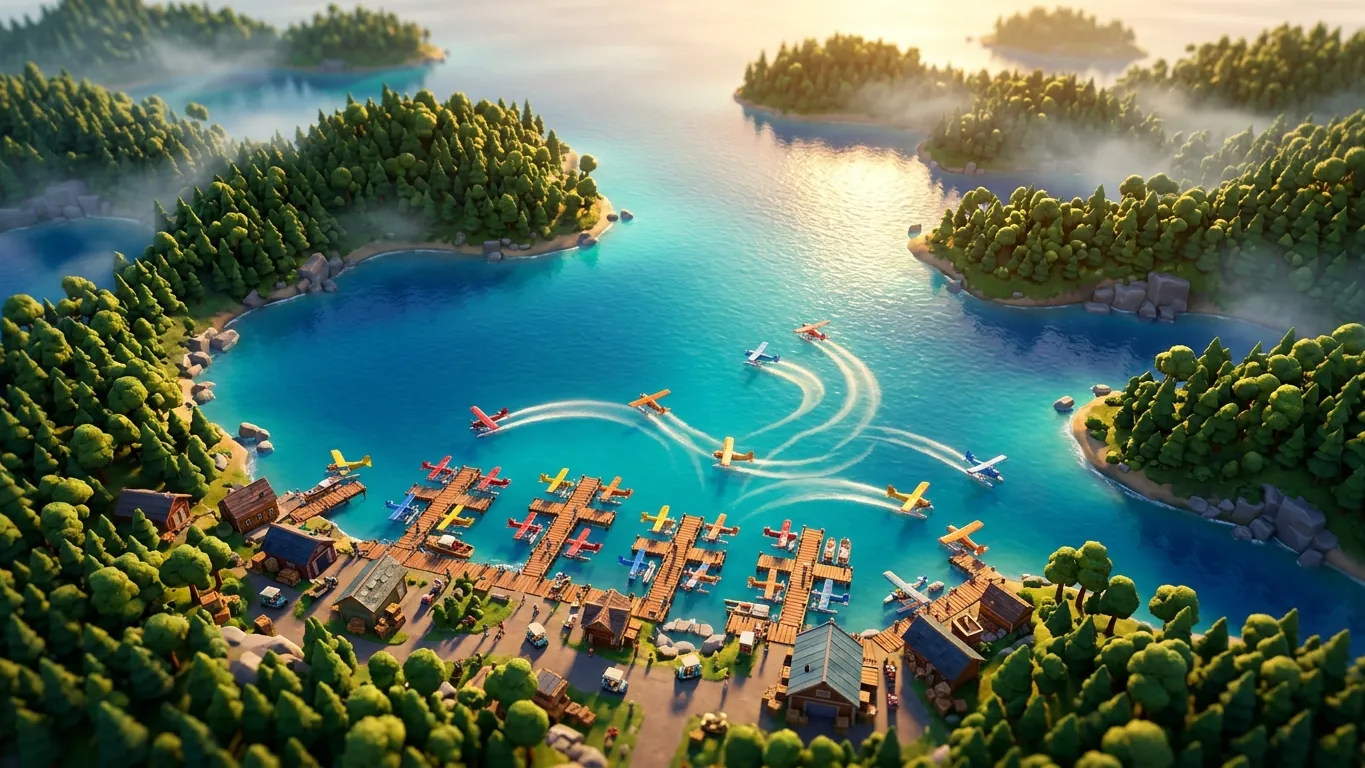
Levels in Seaplane Dispatcher are short. That changes how improvement feels. Instead of one long session where a single mistake costs a lot of progress, you get many quick attempts at the same layout.
The record system gives each attempt a clear point of comparison. Check the level summary in the game to see what counts toward your result, and focus on the parts you can influence directly: safe landings, sensible dock use and avoiding collisions.
Because levels are brief, small habits make a visible difference. A cleaner opening or a better dock split can change how the whole level plays out.
It is tempting to chase a better record by playing faster and taking more chances. In practice, steady play usually produces stronger runs than risky play.
A single collision ends a level, so any shortcut that raises the chance of a crash puts the whole attempt at stake. Focus first on finishing levels cleanly. Once you can do that reliably, look for places where you can tighten routes without adding new crossings.
Think of consistency as the foundation. A dispatcher who never crashes on a map has room to experiment with small improvements. A dispatcher who crashes half the time spends most attempts relearning the basics.
Every map has its own pattern. Some have wide open lakes in the centre, others have narrow channels and scattered docks. Planes tend to enter from certain edges, and some harbours fill faster than others.
Spend a few attempts on a map simply watching. Where do conflicts usually happen? Which docks are easy to reach from each edge? Where is there room to send a plane that needs to wait?
Once you know a map's rhythm, you can plan lanes and dock assignments before traffic builds up. That planning is often what lifts a record, because it reduces the number of last-second decisions late in the level.
These habits are easy to adopt and add up over many short levels.
Decide on lanes for the first few planes before traffic builds up.
A free dock in reserve gives you room for urgent flights and fast planes.
Before restarting, note where and why the collision happened.
Adjust a single habit per attempt so you can see what actually helps.
Short levels make it easy to keep pressing restart. That is part of the appeal, but it can also lead to tired, rushed play where your results start to slip.
If you notice the same mistake happening several times in a row, step away for a while. Coming back with a fresh head often makes the solution obvious.
Records are a fun way to measure progress, not a requirement. Enjoying the calm of a well-run lake district is just as valid a way to play.
 Unlocking new maps: what changes between lakes
An explainer on new maps in Seaplane Dispatcher: how progress opens fresh lake layouts, what tends to differ and how to approach your first run.
Read more
 Why short levels suit an air traffic puzzle
An opinion piece on Seaplane Dispatcher's short levels: why brief sessions suit an attention puzzle, where they work well and where they fall short.
Read more
 Seaplane Dispatcher basics: your first shift
New to Seaplane Dispatcher? Learn the core loop of drawing routes, landing seaplanes and assigning docks, plus habits that prevent early collisions.
Read more