Start on the plane
Begin each line on the plane itself so the route is clearly attached to the aircraft you mean to guide.
Every collision in Seaplane Dispatcher starts with two lines. This guide covers how to draw routes that keep planes apart and bring them down cleanly.
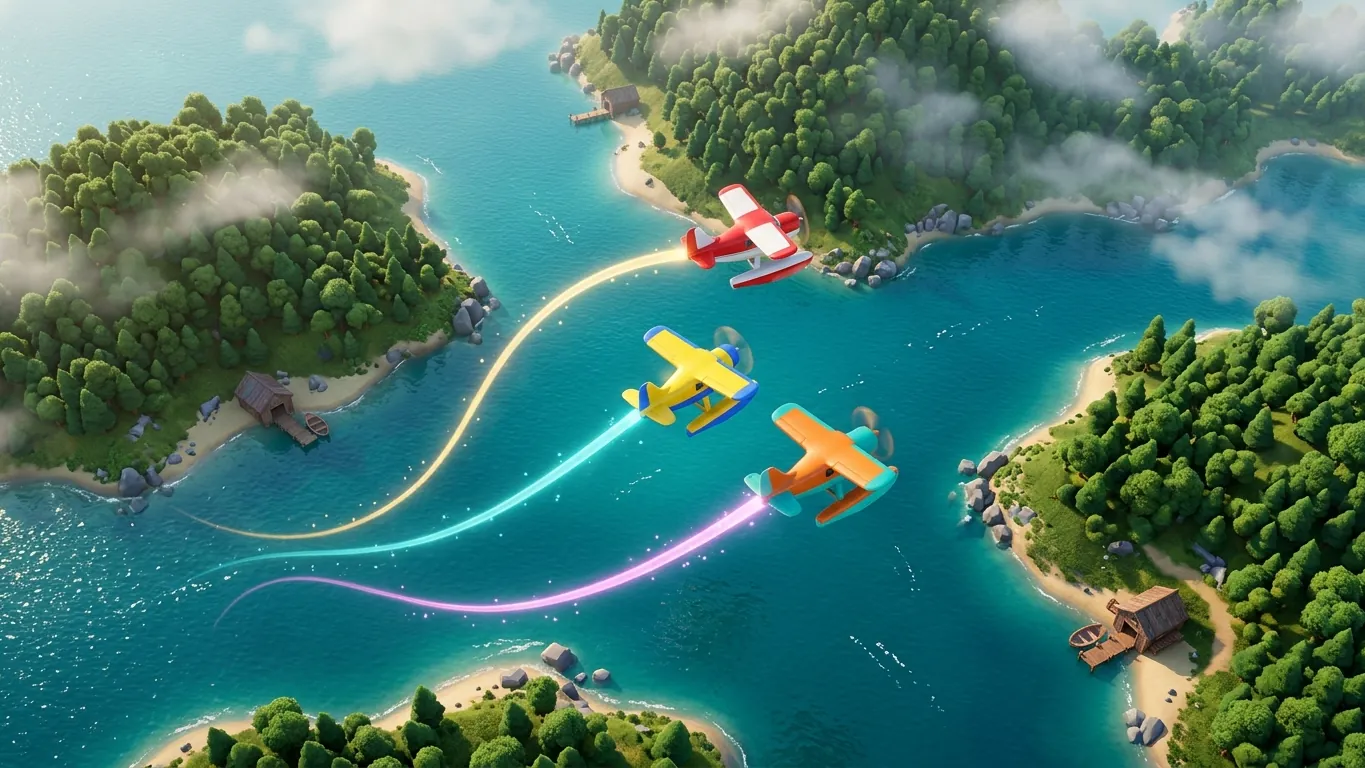
In Seaplane Dispatcher, the route you draw is the plan the plane follows. A plane does not improvise. If the line passes through a spot where another plane will be a few seconds later, the two will meet there.
That means a route is about time as much as space. Two lines can cross safely if the planes reach the crossing point at different moments. They become dangerous when the timing lines up. Thinking of each route as a path through time, not just a line on water, is the biggest step from beginner to confident dispatcher.
Shorter routes are also easier to predict. The longer a plane stays in the air, the more chances it has to meet new traffic you could not see when you drew the line.
Seaplanes in the game move smoothly, so routes with gentle curves are easier to read at a glance. Sharp zigzags are harder to track, and they make it difficult to judge where a plane will be a moment from now.
A reliable pattern is a single wide arc from the entry point to the landing area. Use the open water in the middle of a lake for the turn, and keep the final approach to the dock as straight as the shoreline allows.
If an island blocks the direct path, draw around it with one smooth bend instead of hugging the coastline. Hugging the shore puts planes close to docks and to the approaches other planes will use.
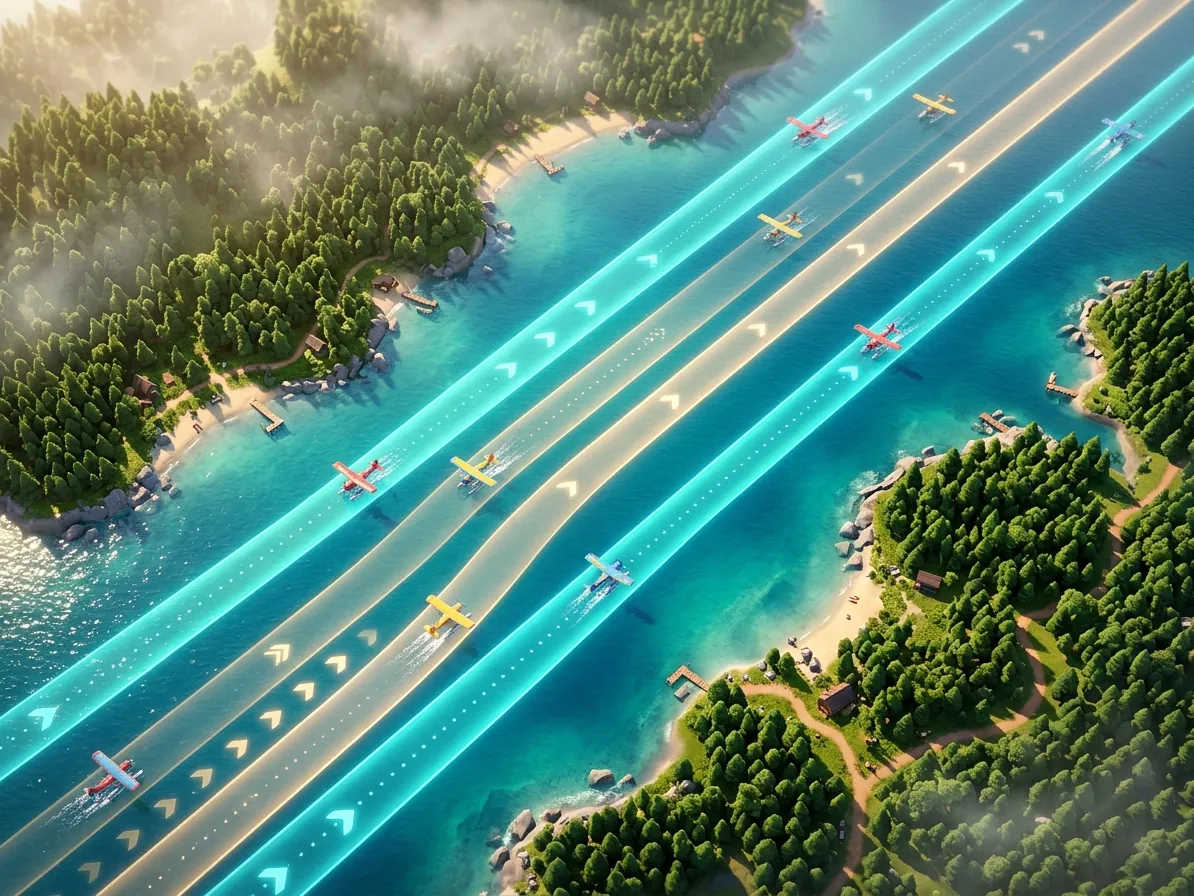
On busy maps, it helps to think in lanes. Pick a rough corridor for planes arriving from each edge of the map and keep using it. Planes from the north follow one lane, planes from the west another, and so on.
Lanes reduce crossings because routes from the same direction run side by side rather than across each other. When a crossing cannot be avoided, try to make it close to a right angle. Two lines that meet at a shallow angle run near each other for a longer stretch, which leaves more room for a collision.
Leave visible gaps between parallel routes. The seaplanes look small on screen, but their paths still need breathing room, especially once faster planes start to appear.
Plans change. A new plane appears, a dock fills up or fog drifts over part of the lake. You can draw a new route for a plane already in the air, and knowing when to do it is a key skill.
Redraw early rather than late. If you spot a possible conflict, adjust one of the two routes while there is still plenty of distance between the planes. Changing a route at the last second often swaps one conflict for another.
When you redraw, change the plane that has more space around it. That plane can take a wider detour without affecting others. The plane in the tighter area should keep its original line if possible.
Small, repeatable habits make route drawing feel calmer over time.
Begin each line on the plane itself so the route is clearly attached to the aircraft you mean to guide.
Make sure the line ends at the landing area or dock you intended, not just near it.
Before finishing a route, scan along it for other planes that will pass the same spot.
Choose the shortest safe path. Less time in the air means fewer surprises.
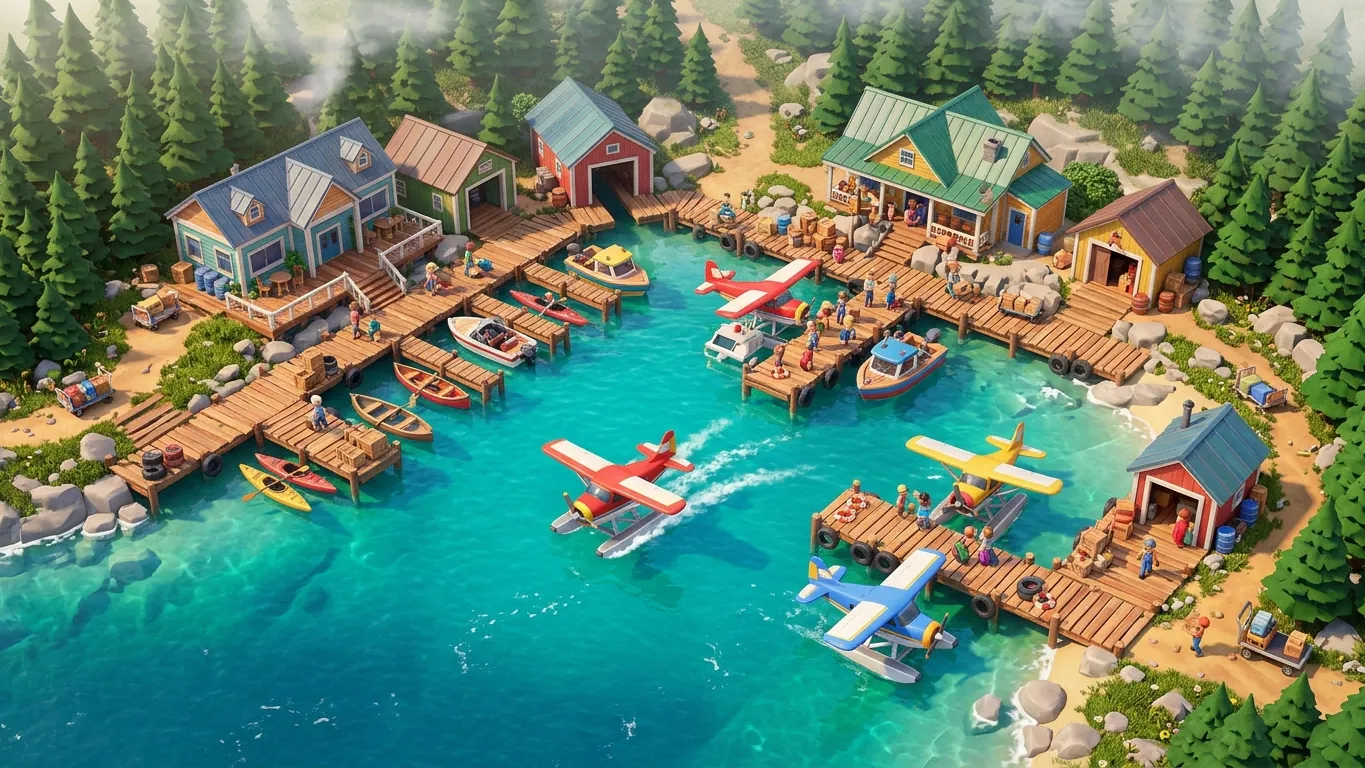 Dock assignment tips for busy harbours
Practical Seaplane Dispatcher tips for assigning docks: match docks to approach direction, keep a spare dock and clear crowded harbours calmly.
Read more
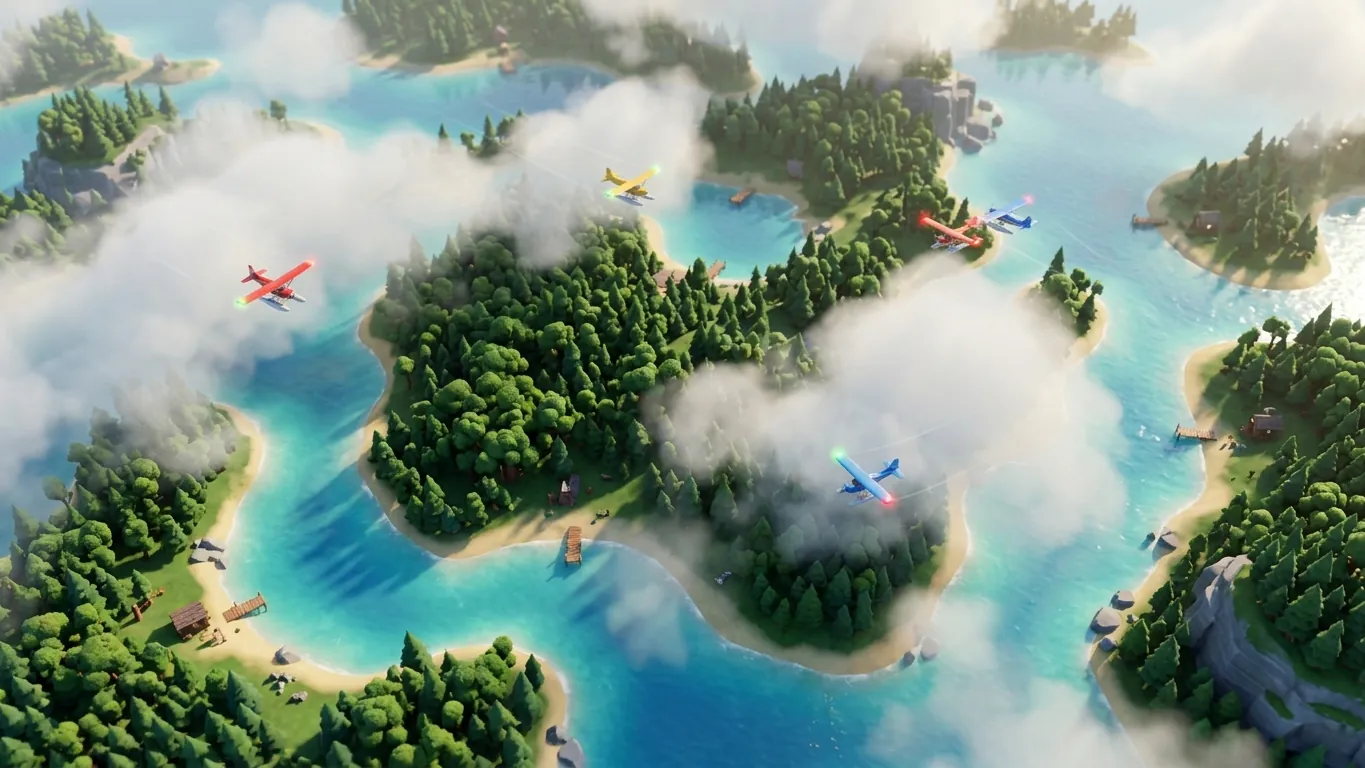 Flying through dense fog
How to handle dense fog in Seaplane Dispatcher: plan routes before it arrives, keep paths simple and recover calmly once visibility returns.
Read more
 Managing fast seaplanes without collisions
Tips for handling fast seaplanes in Seaplane Dispatcher: adjust your timing, give them outer lanes and route them first in mixed-speed traffic.
Read more